
Preparing for and dealing with an emergency
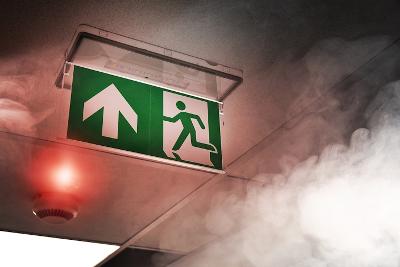
If your business had an emergency, would you know what to do? From what you need to tell us to the contents of your grab bag and Site information Box (SIB), learn more.
Preparation is essential
In the event of an incident, our friendly and helpful staff in the control room that receive 999 or 112 calls will ask you some questions to find out why you need us, so below are some things you can prepare, if you need us.
Ensure that you shut all doors and call 999 or 112
If you are a premise with a fire detection system connected to an Alarm Receiving Centre or monitoring company, do not solely rely on them to call the fire and rescue service. It is better to receive multiple calls from a number of people than depend on the monitoring company calling 999 or 112.
The operator will ask you:
- What is the address of the incident?
- What is the best access to the address (is there a different post code leading to a separate alternative entrance)?
- What is the premises type (eg shop, sheltered housing, residential care home, extra care housing)
- What is the incident type (ie what is on fire)?
- Where is the fire within the premises (the room / flat number / specific location)?
- Is there anyone still in the building?
- How many people are within the premises?
- Has an evacuation procedure started - if so, how many people have been evacuated and how many remain within the premises?
- Are there any occupants that need additional support to evacuate?
- Where are those people located within the building?
- Are there access codes to enter the property?
Helping us when we arrive
On our arrival, your help is key. Have your grab bag to hand and ensure that the detailed floor plans are easily accessible. This will help the crews form a plan of action. The officer in charge will want to be met by the person in charge of the premises at that time so they can ask further questions and help as efficiently as possible.
Emergency grab bag
Grab bags, also known as grab packs, are a very useful tool for your business and Norfolk Fire and Rescue Service when there is an incident at your premises.
A grab bag should contain items that are essential to supporting an evacuation or emergency situation and recovering or continuing your business. You should ensure it contains vital information that will assist your business and Norfolk Fire and Rescue Service and will help inform you and us of procedures and processes during an emergency or evacuation at your premises.
Every business is unique, and your grab bag should be too. Your grab bag should be easily accessible, easy to carry and located on the route of escape and taken with you when you evacuate the premises.
What should a grab bag contain?
Assembling your grab bag is simple and something you can do yourself. Here is a general guide containing some of the items you could include in a grab bag so that you are prepared in the event of an emergency:
- An emergency checklist
- A clear plan (ideally laminated to protect against the elements) of the premises, including: fire escape routes, fire safety measures such as detection and lighting, service isolation points (gas, water, electricity). sprinkler stop valves, location of ventilation switches (if installed).
- Your emergency evacuation procedure (inclusive of personal emergency evacuation plans and highlighting any mobility issues of users)
- Space keys and access codes
- An emergency contacts list
- A notepad and pen in a waterproof casing
- Hi-visibility vests that can be worn by the person in charge / fire marshals
- A small first aid kit (ensure the contents are kept in date) and medical gloves
- First aid 'energy food' such as glucose tablets
- Torch and spare batteries
- Glow sticks
- Emergency blankets
- Walkie talkies (these may be next to the kit as they will need to be charged)
- Whistle
- Drinking water
- USB / memory drives with critical business information to aid with continuity (remember to update regularly).
Remember, the above list is a general recommendation and is not exhaustive. Every business is different and your grab bag contents should reflect your needs.
Preparing external Site information Box (SIB)
An emergency Site Information Box (SIB) can save vital seconds in the event of an emergency. Norfolk Fire and Rescue Service can use the information it contains to determine the course of action we will take.
The information stored within these boxes will vary from business to business. They could contain information to help us access the premises, such as door codes, and provide vital details about the most vulnerable people who may be on site. The SIB may also contain any tools that are required to access areas or shut off facilities, such as keys or electronic fobs.
It is important to ensure the SIB is accessible and recognisable at all times and are located on an external part of the building. You can also inform us of the location of the SIB, so we are aware of its position when we arrive.
What should a Site Information Box (SIB) contain?
Here are some of the possible items you could prepare and place within a strong box:
- Detailed premises plan (ideally laminated to protect against the elements) to include fire escape routes, fire safety measures such as detection and emergency lighting and location of fire extinguishers
- Information on service isolation points (gas, water, electricity) sprinkler stop valves, the location of ventilation switches (if installed)
- Emergency evacuation procedure details (inclusive of personal emergency evacuation plans and highlighting any mobility issues of users)
- Space keys and access codes
- An emergency contacts list
Remember, the above list is a general recommendation and is not exhaustive. Every business is different and your strong box contents should reflect your needs.
Fire emergency evacuation plans
Every business, no matter its size, should have a comprehensive fire emergency evacuation plan. The plan should be a written document that covers the actions of staff members in the event of a fire and the arrangements for calling the fire and rescue service.
The plan should highlight the following areas:
- How people will be warned in the event of a fire
- How the building will be evacuated
- Where the emergency escape routes are and lead to
- Assembly point/s and final place of safety
- Who is responsible for calling the emergency services
- The position and provision of firefighting equipment (ie fire extinguishers)
- The added responsibilities of identified people in the event of a fire (ie fire marshals)
- Provisions for the evacuation of people especially at risk (contractors, visitors, those with disabilities)
- (if applicable) Personal Emergency Evacuation Procedure (PEEPs)
- Who is responsible for communicating with the fire and rescue service upon their arrival
- The location of isolation points (water, electrics, gas)
- Who would be responsible for any shut down procedures (such as machinery or appliances) and special arrangements (ie removal of cylinders)
- The training required to achieve the above points
Your plans should be simple to understand. Consider what the procedures are for those that discover a fire and for those that hear an alarm.
Remember, your plans should reflect your evacuation strategy.
Finally, if your building is large, complex or across multiple floors it is wise to have a floor plan which highlights your escape route. It is advisable to have logos on the plan to show the fire exits, assembly point/s, firefighting equipment and fire alarm items such as the panel, call points and detectors. It is also key to highlight stairs, fire doors and if you are aware of the buildings structure, mark where the compartmentation walls are.


