
Fire and Rescue teams attend more than 10,000 incidents in 2025
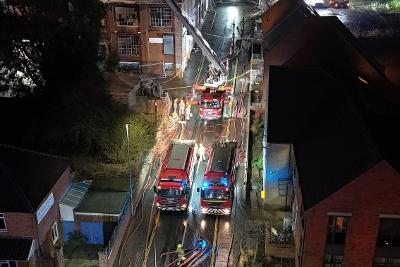
Norfolk Fire & Rescue Service handled almost 18,000 emergency calls last year, an increase of more than 1,600 calls on the previous 12 months.
The service attended a record 10,024 incidents across Norfolk- dealing with everything from fires and water rescue to height/confined space rescue, animal rescue and public safety incidents such as dangers on the highway or with dangerous structures in towns and villages.
NFRS emergency call handlers answered 17,744 calls in 2025, the highest number on record. This represents more than 4,000 additional calls than in 2021 and an increase of nearly 1,000 on the previous highest number recorded which was in 2022.
The service's recent public consultation to inform future risk planning for their Community Risk Management Plan (see note 1) showed that people are concerned about fires and flooding, but the statistics show that firefighters attended the same number of road traffic collisions across the county as they attended fires last year (843 of each) and that the number of flooding incidents attended by emergency crews reduced from 74 in 2024 to 23 in 2025.
"We're a relatively small service compared to some areas, but our team consistently demonstrates their dedication and commitment to Norfolk, with increased emergency calls, incidents and focused prevention and protection work around the county. This 2025 data highlights a really busy year for our service, both on the frontline and also all of the behind the scenes work put in by teams across Norfolk," said Chief Fire Officer Ceri Sumner.
Head of Operations Paul Seaman said: "The work of our committed and dedicated fire and rescue teams continues around the clock, and these figures highlight just how much our service does to ensure the safety of Norfolk and its people, with a growing trend for different types of incident. Their work spans much more than responding to fires, with education on a range of safety issues for communities and businesses at the forefront of what they do."
In 2021, NFRS attended 7,325 incidents, this rose to 8,756 in 2022- the year that saw a long, hot summer with wildfires in the county, then dipped slightly in 2023 to 8,681. In 2024, the service attended 9,352 incidents. Last year was the first time incidents have topped 10,000, with 10,024 recorded.
Prevention and engagement teams, and Norfolk crews, carried out more than 1,200 educational visits in 2025 to help people better understand fire and rescue related risks, with the aim of reducing emergency incidents in the face of new and emerging risks such as lithium-ion battery fires. This number of interactions has more than doubled compared to five years ago (546 education visits in 2021), and this includes the popular Crucial Crew multi-agency project coordinated by NFRS to give a wealth of safety advice to Year 6 children, with partners including Norfolk Resilience Forum, HM Coastguard, Norfolk Constabulary, RNLI, St John Ambulance and others. This is run annually in each district free of charge and also includes children who are home schooled.
We've also worked with partners in the public and private sector on safety campaigns to raise awareness, such as water safety, roads and recruitment.
More than 8,700 home fire safety visits were carried out, supporting vulnerable people to stay safe in their homes by giving advice to ensure residents could evacuate safely in an emergency and advising on risks such as hoarding, portable heaters and emollient creams which can act as an accelerant during a fire. During the visits, fire teams are able to fit smoke alarms and thanks to a partnership with Cadent can also fit carbon monoxide alarms.
The fire protection team supported nearly 3,000 businesses across the county, assisting with fire safety advice and attending properties where concerns had been raised about safety and risk.
Crews continued to support partner agencies, such as police and ambulance services, at a range of incidents. This included providing scene safety at emergencies, as well as supporting EEAST with co-responding to people in cardiac arrest from 12 of Norfolk's fire stations.
During 2025, NFRS invested in two new water carriers into service, representing an £850k spend to replace two smaller vehicles which were more than two decades old. The new vehicles offer a larger water and foam capacity and the ability to create dams to store water which allow them to move on and support the next incident during spate weather conditions.
Flooding incidents dropped in 2025, to 23 recorded incidents, with this type of incident peaking in 2023 which was a wet year for the county with high rainfall and Storm Babet causing many localised flooding incidents that October.
Fires which are outdoors and affect grassland, heatlhland, woodland and crops are classified as 'Fires in the Open'. In 2025, NFRS attended 1,231 of this type of fire. This is the highest since 2022, when wildfires in Norfolk meant the service attended 1,417 'Fires in the Open' incidents.
A new £1m Aerial Ladder Platform vehicle was also brought into service, capable of reaching a height of 45 metres in the event of emergencies. The ALP enables teams to fight fires from above and also have situational awareness from above during ongoing emergencies. 160 new body-worn cameras were also introduced at the end of 2025, to assist with incident awareness and future training post-incident.
The service won a national award for its prevention work around working with social care partners to help educate people on the fire risks of emollient skin products such as creams and lotions.
In 2026, work will continue to help prevent fires and other emergencies, as well as responding swiftly and skilfully when they happen. The service will soon take delivery of new swift water rescue boats and there are proposals to commission work to start on a second batch of new fire engines, which would join the 22 introduced into service in Norfolk in the last few years.
Note 1: Community Risk Management Plan 2026-2031. The amended document following the public consultation will go to Norfolk County Councillors for final sign off this Spring. The document allows NFRS for plan for current and emerging risks across the county, highlighting areas of focus and ensuring the service has the correct teams, kit and resources to deal with future risks in Norfolk's communities.


